

Anthocyanin Market to Reach USD 686.40 Million by 2035, Driven by Clean-Label Demand and Functional Nutrition Growth
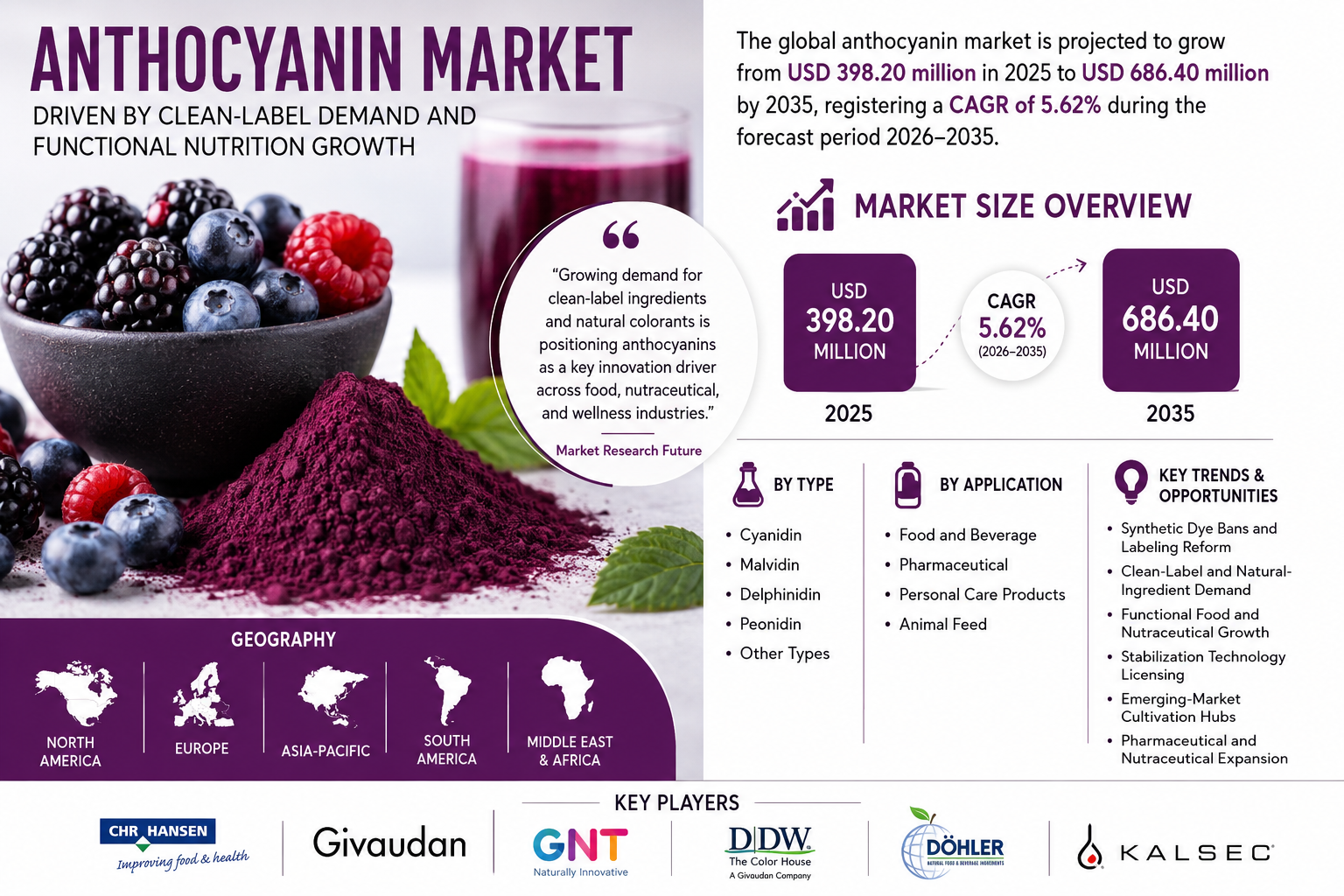
Anthocyanin Market
Anthocyanin market poised for strong growth, with a 5.62% CAGR through 2035 driven by natural color demand, dye bans, and nutraceutical innovation
Growing demand for clean-label ingredients and natural colorants is positioning anthocyanins as a key innovation driver across food, nutraceutical, and wellness industries.”
NEW YORK, NY, UNITED STATES, July 15, 2026 /EINPresswire.com/ -- The global anthocyanin market is projected to expand steadily from 2026 to 2035, supported by rising demand for natural ingredients, stricter regulations on synthetic dyes, and the broader adoption of plant-based colorants across food, beverage, pharmaceutical, and personal care applications. The market was valued at USD 398.20 million in 2025 and is expected to reach USD 686.40 million by 2035, reflecting a CAGR of 5.62% during the forecast period.— Market Research Future (MRFR)
Anthocyanins are naturally occurring pigments found in fruits, vegetables, and flowers that create red, purple, and blue hues. These compounds are increasingly favored by manufacturers seeking clean-label formulations and natural alternatives to artificial colorants. Their use is expanding across beverages, confectionery, dairy alternatives, supplements, functional foods, and wellness-oriented products, where they provide both visual appeal and a natural ingredient story that resonates strongly with modern consumers.
The market is being shaped by a combination of consumer preference, regulatory pressure, and innovation in natural ingredient technologies. One of the strongest drivers is the growing restriction on synthetic dyes and artificial additives. As brands search for safer, more transparent, and more natural options, anthocyanins are emerging as a preferred solution for replacing artificial colorants without sacrificing product attractiveness or shelf appeal.
Clean-Label Demand and Consumer Preferences
Clean-label demand remains one of the most important growth factors for the anthocyanin market. Consumers are paying closer attention to ingredient lists, sourcing practices, and product transparency, creating strong demand for natural colors derived from berries, grapes, purple sweet potato, red cabbage, black rice, and other botanical sources. Anthocyanins are increasingly viewed not only as colorants but also as part of a premium, natural brand identity that supports trust and product differentiation.
This trend is especially visible in beverages, confectionery, bakery products, and plant-based foods, where appearance and ingredient perception strongly influence purchasing decisions. Natural colors help brands align with consumer expectations for authenticity, simplicity, and healthier product choices. In many cases, the presence of recognizable plant-derived ingredients can improve consumer confidence and strengthen brand loyalty.
The rise of minimally processed foods has further reinforced this shift. Consumers often associate natural colors with better quality and cleaner formulations, while synthetic additives are increasingly viewed with caution. As a result, anthocyanins are benefiting from broader demand for recognizable ingredients that fit into natural, organic, and wellness-focused product portfolios. For manufacturers, this creates an opportunity to use anthocyanins as both a functional ingredient and a marketing advantage.
Get Full PDF Sample Copy of Report: (Including Full TOC, List of Tables & Figures, Chart) @ https://www.marketresearchfuture.com/sample_request/26184
Functional Food and Nutraceutical Growth
Functional foods and nutraceuticals are another major driver of market growth. Anthocyanins are widely promoted for their antioxidant properties and are increasingly used in dietary supplements, fortified beverages, wellness shots, and health-focused foods. Their ability to support both color and perceived health value makes them highly attractive in modern product development, especially as consumers seek products that combine convenience with wellness benefits.
The nutraceutical segment is particularly important because it allows anthocyanins to move beyond traditional coloring applications. Brands are incorporating them into capsules, powders, gummies, and functional drinks to appeal to consumers looking for natural wellness ingredients. This dual role supports premium positioning and product differentiation, helping manufacturers create products that stand out in crowded categories.
Growing interest in preventive health is also supporting demand. Consumers are increasingly looking for ingredients associated with general wellness, eye health, cardiovascular support, and oxidative stress management. This is helping anthocyanins gain traction in markets where botanical and plant-based health solutions are becoming more mainstream. As the wellness economy continues to expand, anthocyanins are expected to remain relevant in both consumer-facing and formulation-driven product categories.
Pharmaceutical and Personal Care Applications
Beyond food and beverage, anthocyanins are finding new opportunities in pharmaceuticals and personal care. In pharmaceuticals, they are being explored in wellness-oriented formulations and products tied to antioxidant support. Their natural origin and association with plant-based health benefits make them appealing in products designed for consumers who prefer botanical ingredients over synthetic alternatives.
In personal care, natural pigments and botanical extracts are gaining attention as part of the clean beauty movement. Consumers are increasingly drawn to products with transparent ingredient profiles and natural origin stories. Anthocyanins fit well into skincare, cosmetics, and hair care products where botanical appeal matters and where brands want to communicate purity, sustainability, and ingredient authenticity. Although stability remains a challenge in some formulations, the long-term opportunity in this segment is strong as brands continue to prioritize natural and environmentally conscious ingredients.
The growing overlap between beauty, wellness, and nutrition is also supporting broader interest in anthocyanin-based ingredients. As consumers seek multifunctional products that align with holistic health and lifestyle goals, anthocyanins are well positioned to benefit from cross-category innovation.
Market Segmentation by Type
The market includes several anthocyanin types such as cyanidin, malvidin, delphinidin, peonidin, and other variants. Each type offers different color intensity, stability, and application benefits, giving formulators flexibility based on product requirements. Cyanidin is among the most common anthocyanins found in nature, while malvidin and delphinidin are often valued for their strong color performance in berry-based extracts and other natural formulations.
Type selection is important because anthocyanins behave differently depending on pH, heat, light exposure, and storage conditions. This makes formulation expertise essential, especially in beverages, dairy alternatives, confectionery, and processed foods. As research and extraction methods improve, manufacturers are expected to gain better consistency, stronger color retention, and improved performance across a wider range of applications.
Advances in ingredient science are also helping producers tailor anthocyanin profiles to specific end uses. This is particularly important for brands that need stable, vibrant colors in products with challenging processing conditions. The ability to match anthocyanin type with application need is becoming a key differentiator in the market.
Application Outlook
The food and beverage segment is expected to remain the largest application area over the forecast period. Beverages, fruit preparations, desserts, bakery products, dairy alternatives, and confectionery are key uses for anthocyanin-based colors. The growing popularity of functional beverages and naturally colored products is encouraging manufacturers to adopt ingredients that offer both visual appeal and clean-label value.
Beverages are especially important because they provide a high-visibility platform for natural color innovation. From juices and flavored waters to wellness drinks and plant-based beverages, anthocyanins can help brands create vibrant products that communicate freshness and naturalness. In confectionery and bakery applications, anthocyanins are increasingly used in fillings, coatings, glazes, and decorative elements, helping products stand out while meeting consumer demand for natural ingredients.
Dairy alternatives are another promising category. As plant-based milk, yogurt, and dessert products continue to gain popularity, manufacturers are looking for natural color solutions that complement their ingredient positioning. Anthocyanins can support both visual differentiation and a clean-label message, making them a strong fit for this growing segment.
The animal feed segment is smaller but may offer niche opportunities where plant-derived additives are preferred. While not a major contributor to overall demand, it could support incremental growth as interest in botanical ingredients expands across related industries and as producers explore natural additive systems for specialized feed formulations.
Regional Analysis
North America and Europe are key markets for anthocyanins due to strong clean-label trends, regulatory scrutiny, and high consumer demand for natural food and beverage products. In these regions, manufacturers are actively reformulating products to replace artificial colors with natural alternatives. Retailers and consumers alike are placing greater emphasis on ingredient transparency, which is accelerating the shift toward plant-based color systems.
North America continues to lead in natural color innovation, supported by strong demand from beverage, snack, supplement, and functional food makers. The region’s mature food processing industry and consumer preference for wellness-oriented products create a favorable environment for anthocyanin adoption. Europe is also a major market, driven by sustainability concerns, ingredient transparency, and regulatory pressure on synthetic additives. European consumers are often highly responsive to natural and organic claims, which supports continued demand for anthocyanin-based ingredients.
Asia-Pacific is emerging as a fast-growing region, supported by urbanization, rising incomes, and increasing health awareness. The region also benefits from access to agricultural raw materials that can support local sourcing and ingredient development. As food and beverage manufacturers in Asia-Pacific expand their premium and health-focused product lines, demand for natural colorants is expected to rise steadily. South America and the Middle East & Africa are also expected to offer additional opportunities as awareness of natural colorants continues to grow and as manufacturers seek to diversify their ingredient portfolios.
Competitive Landscape
The market is led by companies such as Chr. Hansen, Givaudan, GNT Group, DDW / Givaudan Color, Döhler Group, and Kalsec Inc. These players are investing in innovation, supply chain strength, and application support to meet rising demand for natural color solutions. Their strategies often focus on improving ingredient performance, expanding global reach, and supporting customers with technical expertise.
Competition is centered on product quality, stability, formulation expertise, and reliable supply. Companies are also focusing on extraction technologies, encapsulation systems, and ingredient blends that improve performance under difficult processing conditions. Strategic partnerships and technical support are becoming increasingly important as customers seek customized solutions that can be integrated into complex product formulations.
As the market becomes more competitive, suppliers that can combine natural sourcing with technical performance are likely to gain an advantage. Customers are not only looking for color but also for consistency, scalability, and support in meeting regulatory and consumer expectations. This is encouraging ingredient companies to invest in research, development, and customer collaboration.
Key Opportunities
One major opportunity lies in stabilization technology licensing. Anthocyanins can be sensitive to heat, light, and pH, so technologies that improve shelf life and color stability are highly valuable. Companies offering advanced formulation support may gain a strong competitive advantage by helping manufacturers overcome technical barriers and expand the use of anthocyanins into more demanding applications.
Another opportunity is the development of emerging-market cultivation hubs. As demand grows, sustainable sourcing of anthocyanin-rich crops will become increasingly important. Regions that invest in cultivation, extraction, and quality control may become important supply centers in the future. This could improve supply chain resilience while also supporting local agricultural economies and creating new value-added processing opportunities.
Pharmaceutical and nutraceutical expansion also presents strong potential. As consumers seek natural wellness products, anthocyanins may see wider use in supplements, functional drinks, and health-focused formulations. Brands that can prove quality, purity, and performance are likely to benefit most from this trend. The ability to position anthocyanins as both a natural color and a wellness ingredient creates a compelling commercial opportunity.
Challenges and Market Constraints
Despite strong growth prospects, the market faces several challenges. Color stability remains a key issue, especially in products exposed to heat, light, or long storage periods. Raw material variability, pricing pressure, and dependence on agricultural supply chains can also affect scalability and consistency. These factors can make it difficult for manufacturers to maintain uniform product performance across different batches and markets.
Regulatory differences across regions may create additional complexity. Manufacturers must ensure compliance with labeling and ingredient rules while maintaining product performance and consumer appeal. In some cases, reformulation may be required to meet local standards or to adapt to specific processing environments. Continued investment in formulation science, sourcing efficiency, and quality assurance will be essential to overcoming these barriers and supporting long-term market growth.
Future Outlook
Looking ahead, the anthocyanin market is expected to benefit from the continued shift toward natural, transparent, and wellness-oriented products. As consumers increasingly favor plant-based ingredients and brands move away from synthetic additives, anthocyanins are likely to play a larger role in product development across multiple industries.
The market’s growth reflects broader changes in consumer behavior, where ingredient origin, health associations, and sustainability matter more than ever. Anthocyanins sit at the center of these trends, offering both functional color and a strong natural story. Their versatility across food, beverage, pharmaceutical, and personal care applications gives them a unique position in the global natural ingredients landscape.
With the market projected to reach USD 686.40 million by 2035, anthocyanins are set to remain an important part of the natural ingredients ecosystem. Companies that invest in innovation, stability, and sustainable sourcing are likely to be best positioned to capture future demand and support the next phase of market expansion.
Discover Related Research Reports By Market Research Future:
Confectionery Fillings Market
https://www.marketresearchfuture.com/reports/confectionery-fillings-market-10612
Confectionery Market
https://www.marketresearchfuture.com/reports/confectionery-market-16095
Non Cocoa Confectionery Market
https://www.marketresearchfuture.com/reports/noncocoa-confectionery-market-1712
Sagar Kadam
Market Research Future
+1 628-258-0071
email us here
Legal Disclaimer:
EIN Presswire provides this news content "as is" without warranty of any kind. We do not accept any responsibility or liability for the accuracy, content, images, videos, licenses, completeness, legality, or reliability of the information contained in this article. If you have any complaints or copyright issues related to this article, kindly contact the author above.
